Current location:Home > Pharmaceutical
Product
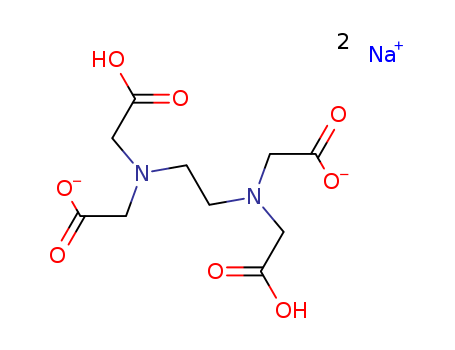

Factory Sells Best Quality Ethylenediaminetetraacetic acid disodium salt 139-33-3 with ISO standards
- Molecular Formula: C10H14N2Na2O8
- Molecular Weight: 336.209
- Appearance/Colour: white crystalline solid
- Vapor Pressure: 1.15E-16mmHg at 25°C
- Melting Point: 248 °C (dec.)(lit.)
- Boiling Point: >100°C
- Flash Point: 325.2oC
- PSA: 161.34000
- Density: 1.01 g/mL at 25 °C
- LogP: -4.74060
Ethylenediaminetetraacetic acid disodium salt(Cas 139-33-3) Usage
|
uses |
Ethylenediaminetetraacetic acid (EDTA) is an aminopolycarboxylic acid and a hexadentate ligand. It chelates with metal ions, especially with cations to form an octahedral complex. Ethylenediaminetetraacetic acid disodium salt (EDTA) is a blood anticoagulant and contributes to the pathogenesis of pseudothrombocytopenia. It chelates with calcium in the blood and inhibits clotting and is routinely used in haematological tests. It enhances the antibacterial activity of lysozyme. EDTA used in chelation therapy chelates with calcium and favors dilation of artery, solubilisation of atheromatous plaques in atherosclerotic vascular disease. EDTA chelation therapy may also protect from oxidative damage during blood and lipid peroxidation in liver fibrosis. |
|
Definition |
ChEBI: An organic sodium salt that is the anhydrous form of the disodium salt of ethylenediaminetetraacetic acid (EDTA). |
|
Application |
Ethylenediaminetetraacetic acid disodium salt dihydrate has been in seed germination trials of plant species and in protein extraction from Moss, Physcomitrella paten. It has also been used in lysis and vacuole buffer for the isolation of vacuoles from Petunia petals.Chelator of divalent cations. Inhibits enzymes, such as metalloproteases, that require divalent cations for activity. |
|
Production Methods |
Disodium edetate may be prepared by the reaction of edetic acid and sodium hydroxide. |
|
Manufacturing Process |
10 mols of ethylene diamine as a 30% aqueous solution and 4 mols of solid caustic soda are placed in a steam heated kettle supplied with an agitator. 8 mols of sodium cyanide as a concentrated water solution (about 30%) are added and the solution heated to 60°C. About a 10 inch vacuum is applied to bring the liquid to incipient boiling. Formaldehyde (7.5 mols of 37% to 40% aqueous solution) is slowly added, the temperature being held at 60°C, and the solution vigorously stirred. Then, when the evolution of ammonia has substantially stopped, an additional 8 mols of sodium cyanide, followed by 8 mols of formaldehyde are added as before. This is continued until 40 mols of cyanide and 40 mols of formaldehyde have been added. Then at the end about 2 mols more of formaldehyde are added, making 42 mols in all, to remove any last traces of cyanide. About 8 to 10 hours are required to complete the reaction. The resulting product, referred to herein as the crude reaction product, is essentially an aqueous solution of the sodium salt of ethylene diamine tetracetic acid.To 1,000 g of the crude reaction product are added 264 g of ethylene diamine tetracetic acid. The mixture is preferably heated to incipient boiling to increase the rate of reaction, and then the mixture is allowed to cool and crystallize. The crystals formed are filtered off, washed with the smallest possible amount of ice water, and dried to a constant weight, which is 452 g. A representative sample of the product so prepared showed, upon analysis, 13.26% sodium against a theoretical of 13.70% for the disodium salt. The dialkali salt has a pH of about 5.3 and behaves like a weak acid, displacing CO2 from carbonates and reacting with metals to form hydrogen. It is a white crystalline solid. |
|
Brand name |
Endrate (Hospira); Sodium Versenate (3M Pharmaceuticals). |
|
Therapeutic Function |
Pharmaceutic aid (chelating agent) |
|
General Description |
Ethylenediamine tetraacetate (EDTA) is a calcium ion chelator, that has a low molecular mass of 292.24 Da. |
|
Flammability and Explosibility |
Nonflammable |
|
Pharmaceutical Applications |
Disodium edetate is used as a chelating agent in a wide range of pharmaceutical preparations, including mouthwashes, ophthalmic preparations, and topical preparations, typically at concentrations between 0.005 and 0.1% w/v. Disodium edetate forms stable water-soluble complexes (chelates) with alkaline earth and heavy-metal ions. The chelated form has few of the properties of the free ion, and for this reason chelating agents are often described as ‘removing’ ions from solution, a process known as sequestering. The stability of the metal–edetate complex is dependent on the metal ion involved and the pH. Disodium edetate is also used as a water softener as it will chelate calcium and magnesium ions present in hard water. It is also used therapeutically as an anticoagulant as it will chelate calcium and prevent the coagulation of blood in vitro. Concentrations of 0.1% w/v are used in small volumes for hematological testing and 0.3% w/v in transfusions. |
|
Biochem/physiol Actions |
Ethylenediaminetetraacetic acid disodium salt has the ability to block the binding of vasoactive intestinal peptide to macrophage membranes. It is mainly used in the purification of protein, to remove divalent cations and also to prevent protease activity. |
|
Safety Profile |
Poison by intraperitoneal and intravenous routes. Moderately toxic by ingestion. Experimental teratogenic and reproductive effects. Mutation data reported. The calcium disodium salt of EDTA is used as a chelating agent in treating lead poisoning. When heated to decomposition it emits toxic fumes of NOx and NasO. |
|
Safety |
Disodium edetate is used widely in topical, oral, and parenteral pharmaceutical formulations; it is used extensively in cosmetic and food products. Disodium edetate and edetate calcium disodium are used in a greater number and variety of pharmaceutical formulations than is edetic acid. Both disodium edetate and edetate calcium disodium are poorly absorbed from the gastrointestinal tract and are associated with few adverse effects when used as excipients in pharmaceutical formulations. Disodium edetate, trisodium edetate, and edetic acid readily chelate calcium and can, in large doses, cause calcium depletion (hypocalcemia) if used over an extended period of time, or if administered too rapidly by intravenous infusion. If used in preparations for the mouth, they can also leach calcium from the teeth. However, edetate calcium disodium does not chelate calcium. Disodium edetate should be used with caution in patients with renal impairment, tuberculosis, and impaired cardiac function. Although disodium edetate is generally considered safe, there have been reports of disodium edetate toxicity in patients receiving chelation therapy. Nasal formulations containing benzalkonium chloride and disodium edetate, both known to be local irritants, were shown to produce an inflammatory reaction, and microscopic examination showed an extended infiltration of the mucosa by eosinophils, and pronounced atrophy and disorganization of the epithelium, although these effects were subsequently shown to be reversible. The WHO has set an estimated acceptable daily intake for disodium EDTA in foodstuffs of up to 2.5 mg/kg body-weight LD50 (mouse, IP): 0.26 g/kg LD50 (mouse, IV): 0.056 g/kgLD50 (mouse, OP): 2.05 g/kg LD50 (rabbit, IV): 0.047 g/kg LD50 (rabbit, OP): 2.3 g/kg LD50 (rat, OP): 2.0 g/kg |
|
Veterinary Drugs and Treatments |
Edetate Disodium (Sodium EDTA) is a chelating agent that is also used to stop the melting effect of collagenases and proteases on the cornea. EDTA is useful in halting melting through inhibition of matrix metalloproteinases, but is not felt to be useful for melting caused by infectious agents. As the effect of EDTA on metalloproteinases is reversible, it must be administered several times daily to be effective. |
|
storage |
Edetate salts are more stable than edetic acid (see also Edetic acid). However, disodium edetate dihydrate loses water of crystallization when heated to 120°C. Aqueous solutions of disodium edetate may be sterilized by autoclaving, and should be stored in an alkali-free container. Disodium edetate is hygroscopic and is unstable when exposed to moisture. It should be stored in a well-closed container in a cool, dry place. |
|
Incompatibilities |
Disodium edetate behaves as a weak acid, displacing carbon dioxide from carbonates and reacting with metals to form hydrogen. It is incompatible with strong oxidizing agents, strong bases, metal ions, and metal alloys. |
|
Regulatory Status |
GRAS listed. Included in the FDA Inactive Ingredients Database (inhalations; injections; ophthalmic preparations; oral capsules, solutions, suspensions, syrups, and tablets; rectal topical, and vaginal preparations). Included in nonparenteral and parenteral medicines licensed in the UK. Included in the Canadian List of Acceptable Non-medicinal Ingredients. |
InChI:InChI=1/C10H16N2O8.2Na/c13-7(14)3-11(4-8(15)16)1-2-12(5-9(17)18)6-10(19)20;;/h1-6H2,(H,13,14)(H,15,16)(H,17,18)(H,19,20);;/q;2*+1
139-33-3 Relevant articles
Method for preparing ethylene diamine tetraacetic acid disodium
-
Paragraph 0014-0019, (2018/02/04)
The invention discloses a method for pre...
VINYL MONOMERS HAVING CHELATING FUNCTIONALITY
-
Page/Page column 10-11, (2013/05/22)
The present invention provides novel pol...
NOVEL POWDERED POLYMER, PREPARATION METHOD THEREOF AND USE OF SAME AS A THICKENER
-
, (2012/07/14)
Disclosed is a branched or crosslinked a...
AMINOCARBOXYLATE POWDERS WITH IMPROVED PURITY AND FLOW ABILITY PROPERTIES
-
Page/Page column 10-11, (2011/12/04)
Provided is a method for preparing stabl...
139-33-3 Process route

-
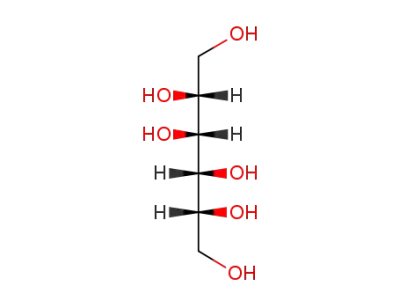
-
69-65-8
mannitol

-
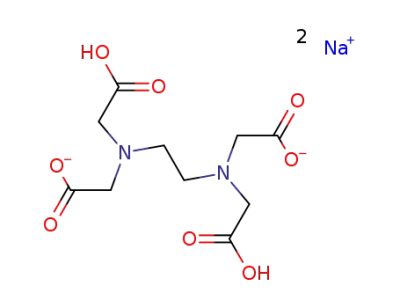
-
139-33-3
edetate disodium
| Conditions | Yield |
|---|---|
|
|
-
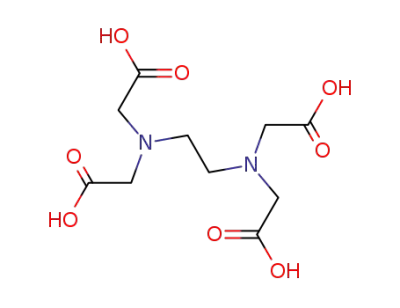
-
60-00-4,94108-75-5
ethylenediaminetetraacetic acid
-

-
64-02-8,139-33-3,150-38-9,7379-28-4,17421-79-3,71705-16-3,116229-67-5
disodium ethylenediamine tetraacetic acid
| Conditions | Yield |
|---|---|
|
With
sodium hydroxide;
In
water;
at 90 - 95 ℃;
for 0.75h;
pH=5;
|
139-33-3 Upstream products
-
60-00-4
ethylenediaminetetraacetic acid
-
107-94-8
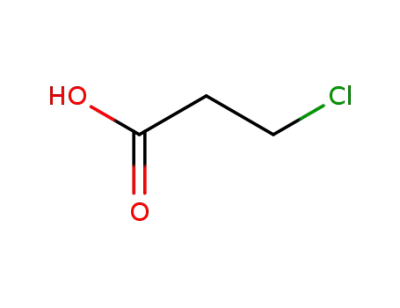
chloropropionic acid
-
24123-05-5
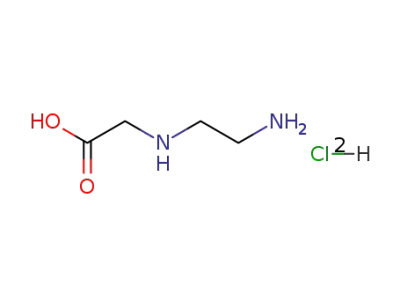
ethylenediamine-N-acetic acid dihydrochloride dihydrate
-
79-11-8
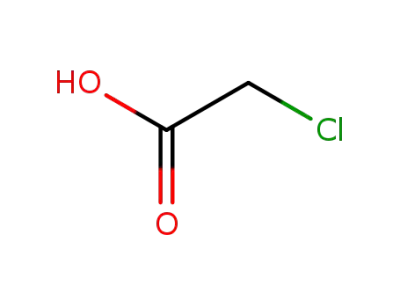
chloroacetic acid
139-33-3 Downstream products
-
688-57-3
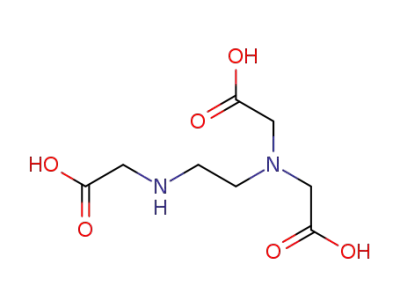
ethylenediamine-N,N,N'-triacetic acid
-
50-00-0
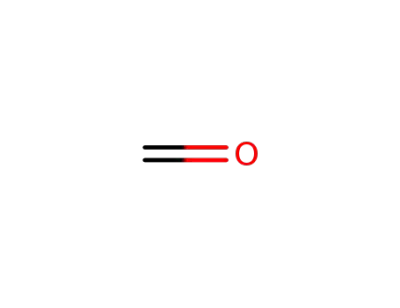
formaldehyd
-
64-18-6
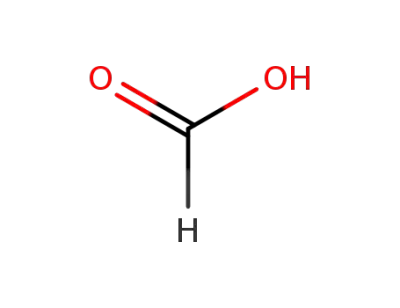
formic acid
-
124-38-9

carbon dioxide